Hour Zero to Hour Forty-Eight: What Actually Happens to Daifuku in a Shipping Box
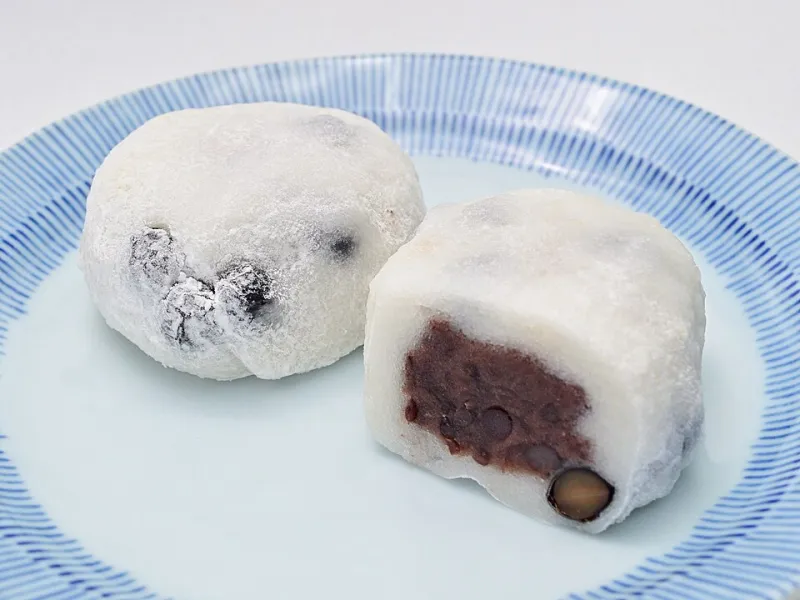
Photo: Ocdp, CC0, via Wikimedia Commons
There's a moment with a truly fresh daifuku — maybe four hours after it's made — when the mochi wrapper still gives like memory foam, the filling peeks through the skin in a soft blush, and the whole thing dissolves on your tongue before you've properly chewed. If you live in Los Angeles or Honolulu or the middle of Queens, you know this moment. If you live in, say, Omaha, you've probably only read about it.
That gap bugged me enough to do something slightly unhinged: order fresh daifuku from three online Japanese bakeries, have them shipped to my Midwest doorstep, and then document — with a spreadsheet, a kitchen scale, and a suspicious amount of discipline — exactly how each one aged, hour by hour, from the moment the box hit my porch.
Here's what four dozen pieces of mochi taught me about the fragility of dessert.
The Setup: Three Boxes, One Countdown
I ordered from three shops I'll call by their shipping style, since the point here is the journey more than the brands: a small West Coast bakery (ships via 2-day USPS Priority), a larger East Coast Japanese market (2-day, foam cooler, ice pack), and a specialty confectioner in Hawaii (overnight, vacuum-sealed trays inside a padded box).
All three arrived on schedule. All three looked gorgeous. That's where the similarities ended.
The moment of truth for any daifuku is the pinch test: press the wrapper gently with your thumb. Fresh mochi springs back slowly, like it's thinking about it. Day-old mochi springs back fast and bouncy. Two-day-old mochi doesn't really spring at all — it dents, then sulks.
Hour Zero: The Unboxing
The Hawaii box arrived first, at 9:40 a.m., cold to the touch. The vacuum-sealed tray was a bold move — and honestly, a mixed bag. The mochi inside was pristine, pillowy, dusted in potato starch that hadn't clumped. But there was a faint compressed quality to the wrappers, as if they'd been dreaming under a weighted blanket. By the pinch test, though: near-perfect. The strawberry daifuku inside had kept its shape entirely.
The West Coast bakery's box arrived warm-ish, nestled in paper shreds with no cold pack. The mochi was beautiful at hour zero — softest of the three, that dreamy give we chase — but I could already tell it was operating on borrowed time.
The East Coast market's foam cooler kept everything fridge-cold, which slowed the aging clock but also meant the mochi was firm and slightly rubbery until it came back to room temperature, about 90 minutes on the counter.
The Hourly Ledger (Condensed for Your Sanity)
- Hours 0–8: All three boxes delivered their best selves. The West Coast mochi was the texture gold standard — the kind of wrapper that stretches thin and melts rather than chews. The Hawaii mochi needed an hour out of the fridge to hit its stride.
- Hours 12–24: The West Coast daifuku began its slide. Wrappers tightened, the red bean filling no longer oozed, and the powdered surface started to feel dry. Still very good. No longer transcendent.
- Hours 24–40: The East Coast mochi, buffered by the cold pack, was arguably now the freshest-tasting of the three. Cold shipping is a texture tax up front, but it buys you a full extra day of quality.
- Hour 48: The Hawaii vacuum-sealed pieces held up shockingly well — the seal slowed moisture loss dramatically. The West Coast pieces were now best toasted lightly in a dry pan or microwaved for eight seconds to revive them (more on that below).
What This Means for Your Order
If you take one thing away, let it be this: the packing method matters more than the distance. A shop that ships cold, seals well, and dusts generously is buying you time. A shop that wraps mochi in wax paper and prays is selling you a 24-hour window, no matter how fast the courier is.
A few practical notes for ordering daifuku online from anywhere in the US:
- Overnight or 2-day, always. Beyond 48 hours in transit, you're ordering a different dessert.
- Ask about the seal. Individually wrapped or vacuum-sealed pieces age far better than naked mochi in a shared box.
- Seasonal fillings ship best. Strawberry daifuku are delicate; red bean, kinako, and custard fillings hold their character much longer in transit.
- Order for the day you'll eat, not the day you order. Schedule delivery for a day you're home, so the box doesn't bake on a sunny porch. Porch heat is the silent killer.
- Learn the revive trick. Eight seconds in the microwave (with a cup of water alongside to keep the wrapper from drying) brings day-old daifuku back to a respectable squish. Twenty seconds turns it into a molten puddle. Start low.
The Bittersweet Conclusion
My spreadsheet says the peak window for shipped daifuku is roughly hours 4 through 20 after they leave the kitchen, assuming decent packing. That's a narrow lane. But honestly, that's part of the charm — daifuku are a dessert with an expiration date on its soul, and there's something lovely about eating something that's actively, gently becoming its past self.
If you're stuck far from a Japanese bakery, don't let the logistics scare you off. Order once, learn how the box behaves, and then order again with better timing. The melt-in-your-mouth squish is worth chasing — even to the middle of Nebraska.