Listen to the Mochi: An Afternoon of Daifuku Lessons With My Neighbor's 85-Year-Old Obaachan
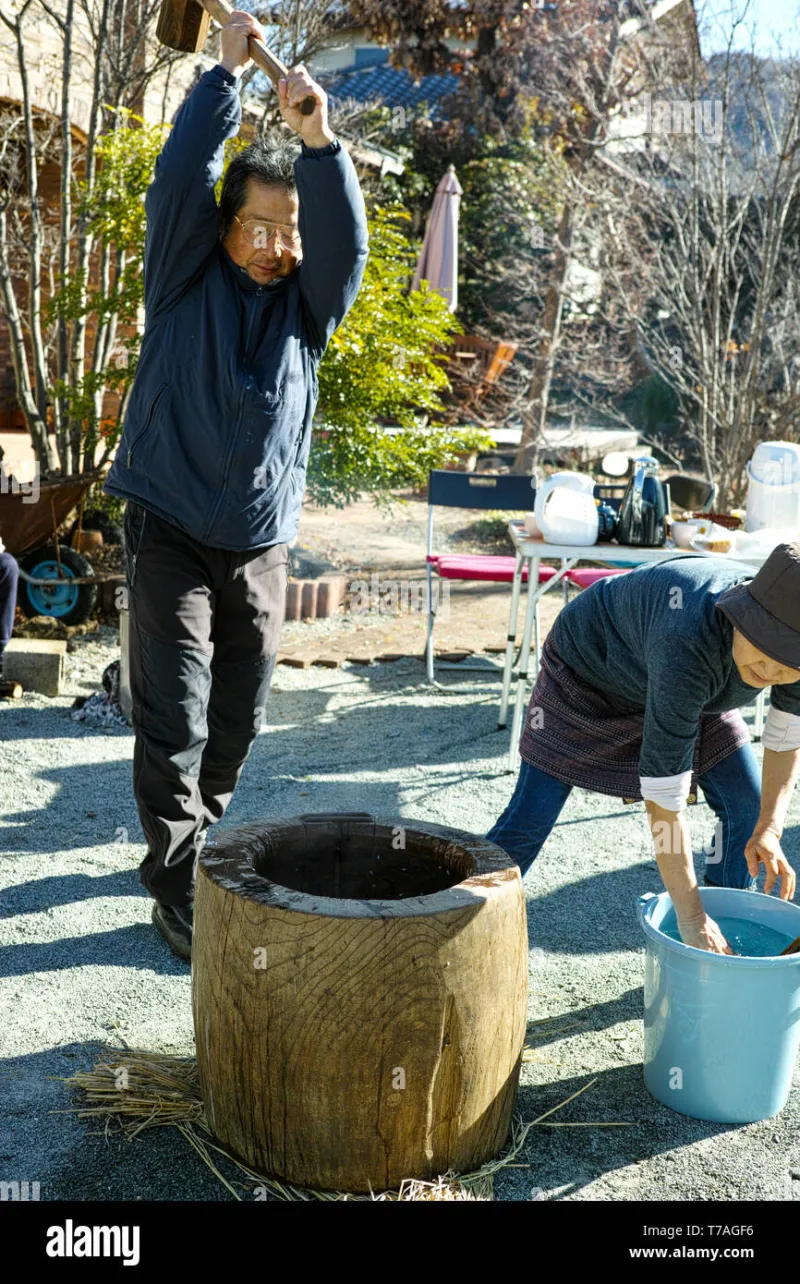
Photo: elderly Japanese grandmother hands making mochi traditional kitchen, via c8.alamy.com
Mrs. Tanaka knocked on my door in October with a Tupperware of daifuku and a proposition: her mother, visiting from Osaka for six weeks, wanted to teach someone how to make them properly. Not from a video. Not from a book. In person, the way she'd learned it herself somewhere around 1945.
I said yes before I finished chewing.
The Kitchen Where Time Moves Differently
Mrs. Tanaka's mother — I was instructed to call her Obaachan, which means grandmother — is 85 years old and about five feet of pure authority. Her kitchen smelled faintly of toasted soybean flour. On the counter: a bag of shiratamako, a wooden bowl worn smooth as river stone, a pot of anko she'd made the night before, and a kitchen towel folded into a perfect rectangle.
No stand mixer. No kitchen scale, at least not out. No timer.
"Recipes are for remembering," she told me through her daughter's translation, patting the counter. "Not for following."
I'd made mochi before — plenty of it, mostly from microwave tutorials. I considered myself competent. Within ten minutes, I understood I had been making a reasonable approximation of mochi, the way a kid with a guitar makes sounds.
Lesson One: Your Palms Are a Tool
The first thing she corrected was my temperature. I'd been running my hands under cold water to handle the sticky dough, a habit I picked up from a YouTube video. Obaachan watched me do this exactly once, then gently pulled my hands away from the tap.
"Warm hands," she said, holding her own palms up. "Mochi likes warm."
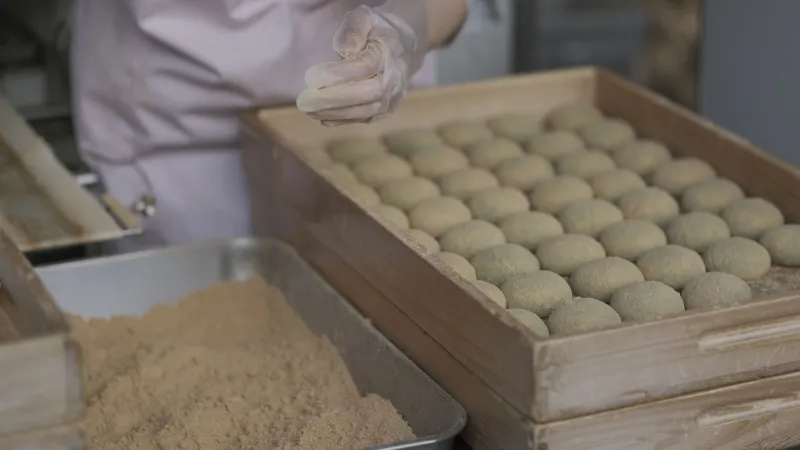
Here's the science she didn't explain but I later confirmed: warm, damp palms keep the dough from seizing and sticking in clumps, while cold hands cause the starch to firm up unevenly. She dampened her palms with warm water, shook off the excess, and worked the dough in a rhythm — fold, press, turn, fold, press, turn — like she was kneading something alive and didn't want to startle it.
When I copied her, the difference was immediate. My dough went from lumpy and sulky to smooth and glossy in under two minutes. My previous mochi sessions had involved ten minutes of fighting. The dough wasn't the problem. I was.
Lesson Two: The Mochi Will Tell You
This is the phrase she used more than any other: listen to the mochi. Not with your ears, exactly — though she did insist the sound of the dough changes as it comes together, a wetter slap softening into a muffled thump — but with your hands and eyes.
Too dry, and the dough resists the fold. Too wet, and it slumps instead of holding a shape. Right, and it stretches thin without tearing, translucent at the edges, and pulls back slowly when you poke it, like good sourdough starter.
There's no minute count for this. Obaachan has made mochi for roughly seven decades and she still checks every batch. The variable isn't skill. It's the flour, the humidity, the season. In her Osaka kitchen, she said, the mochi behaves differently in June than in January. American kitchens with forced-air heat and swamp coolers are no different.
So I stopped watching the clock and started watching the dough. It felt vaguely rebellious after years of baking by timers and thermometer probes.
Lesson Three: The Filling Is a Gift, Not a Portion
We made ichigo daifuku — the strawberry-stuffed kind — and this is where my American instincts failed me most visibly. I kept trying to wrap big, generous balls of anko around the berries, because more filling equals more flavor, right?
Obaachan took a strawberry, coated it in a thin cloak of red bean paste, and held it up. "The mochi is the gift," she said. "The filling is the surprise."
The proportion is the point. A proper daifuku should feel nearly empty when you pick it up — a soft, weightless thing — and then deliver the filling as a discovery when you bite through. She wrapped each one with the seam pinched at the top, then turned it seam-side down on a bed of katakuriko so it looked like nothing at all. A plain white pillow hiding a secret.
I've been overstuffing desserts my entire life, and not just mochi. There's something in American food culture that equates abundance with generosity. Obaachan's daifuku argues the opposite: restraint is the generosity. You're giving someone a small moment of wonder instead of a mouthful.
What I Brought Home
I left with a container of twelve slightly lopsided daifuku, a bag of shiratamako she pressed into my hands at the door, and a set of principles that have quietly rewired how I cook:
- Warm your hands, dampen them lightly, and re-dampen as you go. Cold tools make tense dough.
- Learn the look and feel of done dough instead of a time. Stretchy, glossy, slow to bounce back.
- Wrap generously of mochi, sparingly of filling. Let the filling be a reveal.
- Make it with someone when you can. Obaachan learned from her mother; the recipe survived because it was passed hand to hand, not written down.
That last one might be the real lesson. I've made daifuku three times since that afternoon, and each time my hands remember the rhythm before my brain does — fold, press, turn. Somewhere in there, an 85-year-old woman from Osaka handed me seventy years of kitchen knowledge through a wooden bowl and a lot of patient gestures.
The daifuku were gone in two days. The lesson, I suspect, will stick around longer. Kind of like mochi, actually — soft, stubborn, and surprisingly hard to let go of.