The Night I Swapped Snickers for Mochi: My Halloween Candy Bowl Experiment
Photo: individually wrapped mochi daifuku sweets in a bowl on a porch with Halloween decorations, via i.pinimg.com
Every October, my porch becomes a sugar distribution center. I buy roughly ninety fun-size candy bars, stock a plastic pumpkin-shaped bowl, and brace for the doorbell symphony. This year, I decided to mess with tradition. I swapped half the candy for individually wrapped daifuku and kept detailed notes on what happened next.
Why? Partly curiosity, partly because I've spent the last two years writing about mochi for this site, and partly because I wanted to see if America's most commercial candy holiday had room for a Japanese sweet that's been around for centuries.
Setting Up the Great Candy Swap
The rules I set for myself were simple. Every trick-or-treater got their usual pick from the candy bucket, plus one wrapped daifuku as a bonus. I didn't want to force the experiment on anyone — I wanted to observe a genuine first reaction.
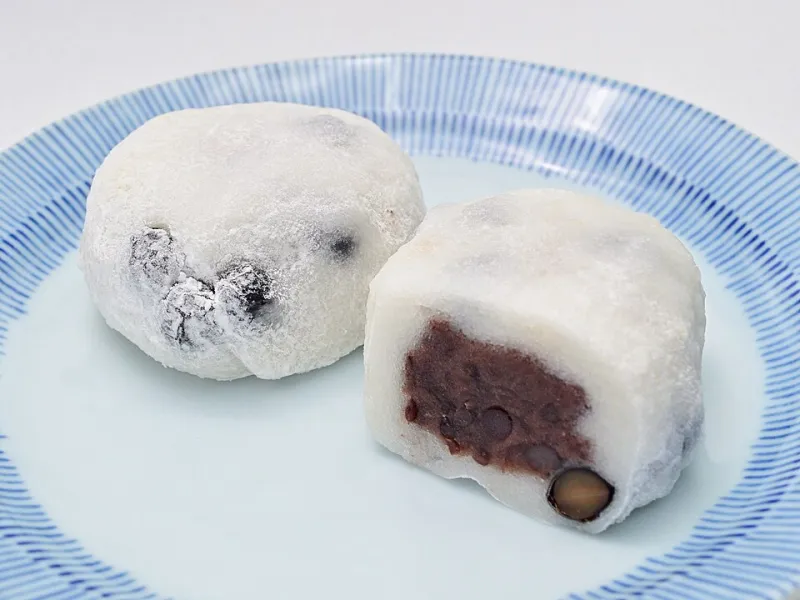
I sourced two kinds of shelf-stable daifuku online: classic red bean (anko) versions and a yuzu citrus variety. Both came individually wrapped in the same style as Japanese convenience store sweets, which mattered. If you've ever left a daifuku out overnight, you know fresh mochi skin turns into something closer to a chewy frisbee. Wrapped versions hold their texture far longer and, critically, can survive a night in a candy bowl without refrigeration.
Total spend: about $28 for twenty-four pieces, shipped. My candy haul — a mix of Snickers, Kit Kats, and Reese's cups — ran me about $19 for sixty fun-size pieces. So yes, daifuku cost roughly four times more per piece. I'll come back to whether that was worth it.
The Kids Weigh In
Reactions fell into three distinct camps.
Camp One: The Confused Stare-Down. Roughly a third of the kids held the package at arm's length, turned it over twice, and asked some version of "what is this?" I gave a ten-second elevator pitch each time: "It's mochi! Sweet rice dough with red bean paste inside. Like a gummy but fancier." About half of these kids said a polite thanks and moved on.
Camp Two: The Instant Fans. The biggest surprise of the night. Kids who recognized mochi from boba shops, anime, or a friend's lunchbox lit up like I'd handed them a limited-edition trading card. One fifth-grader yelled back down the driveway, "MY MOM LOVES THESE." That's a review you can't buy.
Camp Three: The Trader. By 8:30 pm, word had apparently spread. Two separate kids came back — after already visiting once — to ask if they could trade a Snickers for another mochi. I obliged. Economists would call this revealed preference. I call it a win.
The Parent Texts (The Part I Didn't Expect)
Here's what actually sold me on repeating this next year. Around 9 pm, my phone buzzed. It was my neighbor Priya, whose son has a dairy allergy and who spends every Halloween reading ingredient labels in my doorway with the weariness of a customs officer. Her text: "The mochi has no dairy?? He can actually eat it?? Please tell me where you bought these."
Then another neighbor asked whether they were gluten-free. (Many shelf-stable mochi are, since sweet rice flour replaces wheat — though always check the label, because fillings and dusting starches vary.) By morning I had three parents asking for links.
That's the quiet allergen-friendly case for daifuku: a typical red bean mochi contains rice, sugar, bean paste, and starch. No nuts, no dairy, no gluten in most versions. For a holiday where kids with allergies often come home with a haul they can't touch, that's not a gimmick. It's a genuine win.
A Quick Buying Guide for Your Candy Bowl
If you want to try this next Halloween, a few hard-earned tips:
- Buy individually wrapped, shelf-stable daifuku only. Fresh bakery daifuku will not survive a candy bowl. Look for vacuum-sealed or wrapped pieces sold as "mochi snacks" — brands from Asian grocery stores or online retailers work well.
- Skip the ice cream mochi. Obvious, but worth saying. If it needs a freezer, it doesn't need a porch.
- Stock two flavors minimum. Red bean is the classic, but a fruit-flavored option (yuzu, strawberry, mango) gives hesitant kids a familiar-sounding entry point.
- Print a tiny label card. I taped a card to the bowl that read "Mochi — sweet rice cake, contains rice & sugar." It cut the confused stares roughly in half and answered most parent questions before they formed.
- Budget for roughly $1.20 per piece if ordering online with shipping. Bulk Asian grocery purchases can drop that closer to 60–75 cents.
Was It Worth It?
Strictly by cost per treat, candy wins. But Halloween isn't a cost-per-ounce game — it's a memory game. And I gave out maybe forty pieces of candy that tasted like every other porch on the block, and forty pieces of something that made kids stop, ask questions, and in a few cases come back for more.
If you want to ease in rather than go full mochi, run my setup: candy bucket first, daifuku as the bonus. You'll spend a little extra, and in return you get to introduce a few dozen kids to a sweet that predates the candy bar by a couple hundred years.
Next year I'm adding kinako-dusted versions to the bowl. The confused stares are going to be spectacular.