Crumbs, Cracks, and Comebacks: What Happened When My Book Club Tried Folding Daifuku
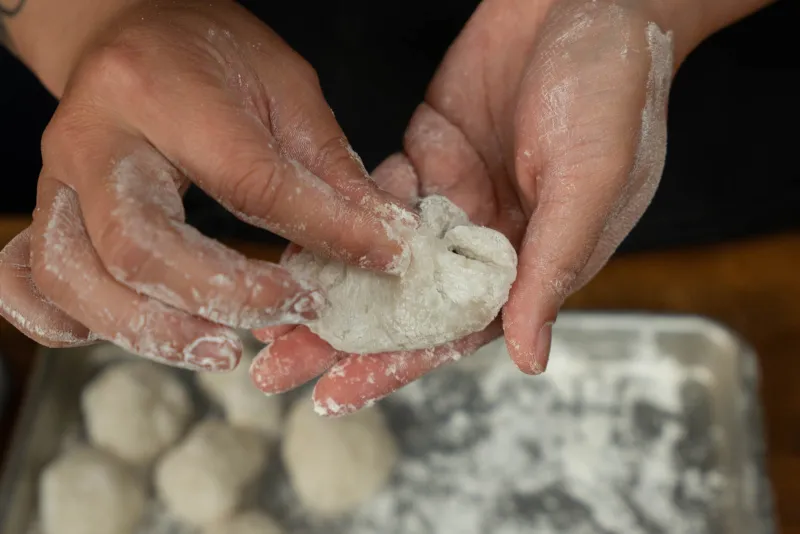
Photo: friends making mochi daifuku together home kitchen hands flour, via adventuresofcarlienne.com
My book club has read some heavy stuff over the years, but nothing prepared these women for the emotional weight of dough that fights back.
Last month, instead of arguing about the novel (nobody finished it, as usual), I decided we'd make daifuku from scratch. Five friends, one kitchen in suburban Ohio, and a bag of glutinous rice flour I'd ordered online because our local Kroger still thinks "mochi" means ice cream.
What followed was equal parts comedy and, surprisingly, a masterclass in how Americans approach Japanese sweets. If you're thinking about hosting your own mochi-making night, learn from their beautiful disasters.
Mistake #1: Treating Mochi Like Cookie Dough
The moment I set out the shiratamako, water, and sugar, my friend Deb did what any American baker would do: she grabbed a rolling pin.
"Whoa, whoa," I said. "There's no rolling. There's barely any stirring. You microwave it."
She looked personally offended. In our baking culture, dough is something you work — knead, roll, cut. Mochi dough is something you wait for. It goes into the microwave in stages, gets stirred between bursts, and transforms into a translucent, stretchy blob that looks wrong right up until the moment it looks perfect.
The fix: Before anyone touches anything, demo the whole process once. Let them watch the dough go from milky slurry to glossy, elastic cloud. Once they've seen the transformation, the rolling pins stay in the drawer.
Mistake #2: Skipping the (Dusting) Powder Station
This is where the cracks — literal cracks — started.
Daifuku dough is basically edible superglue. Japanese recipes call for dusting your work surface generously with katakuriko (potato starch) or cornstarch. My friend Linda, who describes herself as "not a wasteful person," gave her parchment paper what I'd call a light misting of starch.
Her first daifuku wrapped itself around her fingers like a tiny pink octopus. When she peeled it off, it tore. Crack number one.
The fix: Set up a proper "powder station" — a shallow bowl of cornstarch, a pastry brush for coating hands, and a rule: when in doubt, add more starch. Unlike most baking, over-dusting here is nearly impossible. The excess brushes right off.
Mistake #3: The Filling Free-For-All
I'd prepped classic red bean paste (anko) and — because I know my audience — strawberry halves with Nutella as a wildcard. Big mistake in one specific way: portioning.
Everyone scooped filling like they were serving themselves at Thanksgiving. Then they tried to encase a golf ball of paste in a golf ball of dough, and physics said no. Cracks everywhere. One daifuku split so dramatically we nicknamed it The Grand Canyon.
The fix: Portion the filling before guests arrive. Small balls, about a tablespoon each, chilled so they hold their shape. The dough-to-filling ratio should feel almost insultingly stingy. Daifuku is a two-bite dessert, not a calzone.
Mistake #4: Perfectionism, the Great American Disease
Here's the thing that surprised me most. Every single time a daifuku came out lopsided or creased, my friends apologized to me. To me.
"Sorry, mine's ugly."
"Yours looks way better, mine's a mess."
But here's what I told them, and what my neighbor's obaachan told me years ago: in Japan, slightly irregular homemade mochi isn't a failure — it's proof a human made it. The pristine, identical daifuku in the fancy department store cases are machine-made marvels, but nobody's grandmother is producing them in her kitchen either.
By round three, something shifted. Deb stopped apologizing. Linda made one with a strawberry peeking through a tear in the top and declared it "rustic chic." We ate the evidence with matcha and agreed it was the best book club yet.
Your Mochi Night Survival Checklist
Want to run this experiment on your own friend group? Here's the condensed version:
- Keep the group small. Four to six people max around one starch station. Mochi waits for no one, and the dough gets harder to handle as it cools.
- Microwave, don't steam. American kitchens understand microwaves. Three bursts of one minute each, stirring in between, gets you there without special equipment.
- Pre-portion everything. Filling balls, dough rounds, starch. Think assembly line, not cooking show.
- Serve a "mistakes plate." We put every torn, cracked, and lopsided attempt on one plate and ate those first. Zero pressure, zero waste.
- Pair with tea, not wine. At least until the folding is done. I'm just saying. There's a correlation.
The Sweetest Takeaway
By the end of the night, the book club had produced roughly two dozen daifuku — maybe six of them photo-worthy. But nobody reached for the ugly ones last. There's something about making a food with your own sticky hands that makes you protective of it, cracks and all.
My friends learned that mochi isn't fragile so much as particular — it wants starch, patience, and small expectations. I learned that the fastest way to demystify Japanese sweets for Americans isn't a beautifully written recipe. It's handing someone a ball of warm dough and letting them panic for thirty seconds.
Next month's book is a thriller. The daifuku, I suspect, will be the only suspense we can handle.